In modern CNC manufacturing, precision is not achieved by machines alone. Every accurate cut, drilled hole, or milled surface depends on how securely and consistently a component is positioned during machining. This is where jigs and fixtures become essential, as they control part alignment, resist cutting forces, and ensure repeatable results across production cycles. Without reliable tooling, even high-end CNC equipment cannot deliver consistent quality or efficiency.
As CNC production continues to evolve, manufacturers face increasing pressure to meet tighter tolerances, shorter lead times, and higher quality standards. Well-engineered tooling systems provide the foundation for controlled processes, reduced errors, and predictable output. From prototype development to full-scale production, structured tooling solutions help bridge the gap between design intent and manufactured reality.
The Role of Jigs and Fixtures in CNC Accuracy
CNC machines operate based on programmed paths, but the accuracy of those paths depends on how the workpiece is held. Jigs and fixtures define fixed reference points that establish the relationship between the part, the machine, and the cutting tool. When these reference points are stable, machining results remain consistent from the first part to the last.
Proper tooling eliminates unwanted movement and variation. It ensures that each component is positioned in exactly the same way, regardless of operator or shift. This level of control is critical for maintaining dimensional accuracy, achieving reliable surface finishes, and meeting strict inspection requirements in demanding industries.
Understanding the Difference Between Jigs and Fixtures
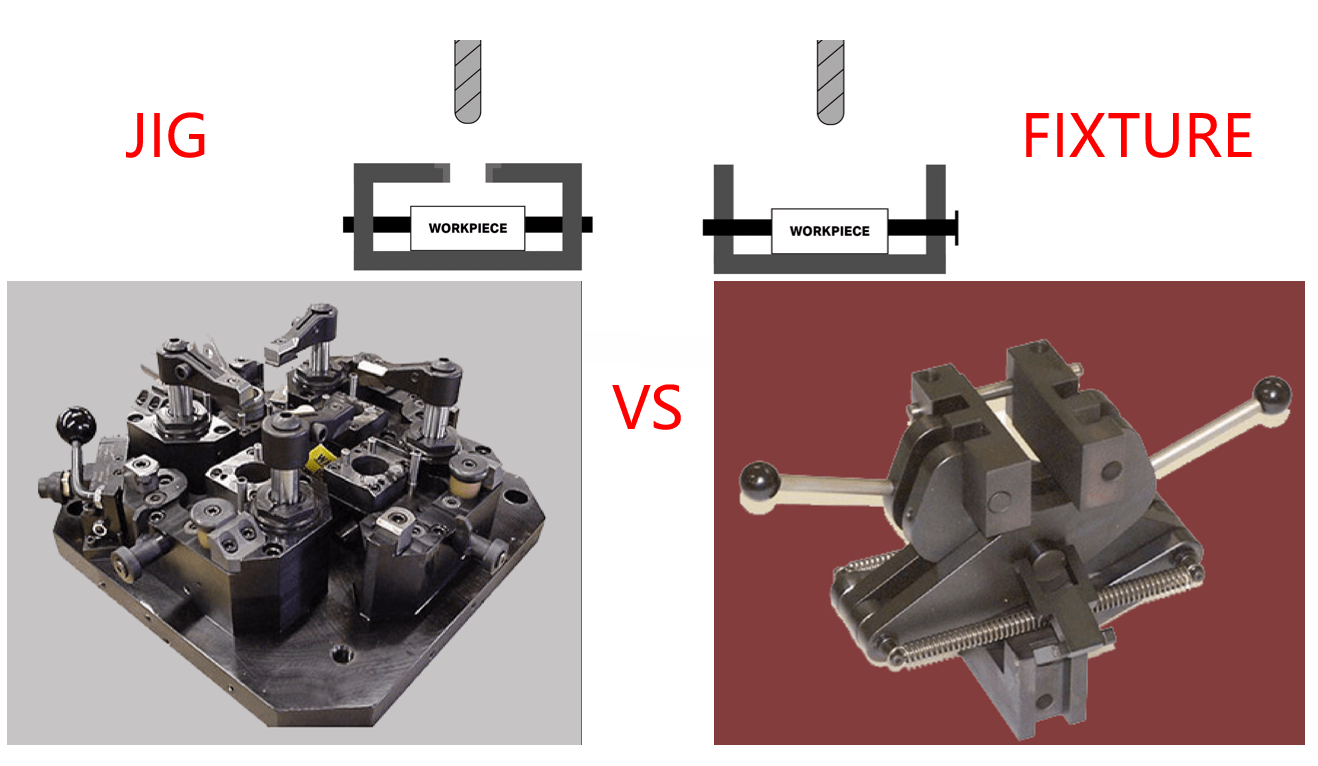
Although often mentioned together, jigs and fixtures serve slightly different purposes in CNC machining. Jigs guide the cutting tool while also supporting the workpiece, making them common in drilling or tapping operations. Fixtures, on the other hand, focus on holding and locating the part while the machine guides the tool, which is typical in milling and turning.
Both are designed to improve repeatability and reduce setup time. By standardizing how parts are positioned, manufacturers can reduce reliance on manual alignment and minimize the risk of setup-related errors. This structured approach leads to more predictable machining outcomes and higher overall productivity.
Workholding Tools and Process Reliability
Workholding tools are a critical part of any CNC setup because they directly influence stability during cutting. Cutting forces, vibration, and tool pressure can cause part movement if the workpiece is not properly secured. Effective workholding tools apply controlled clamping force to keep components stable without causing deformation.
Reliable workholding improves machining performance in several ways:
It reduces vibration and chatter that can damage tools or surfaces
It improves dimensional consistency across multiple parts
It helps extend tool life by maintaining stable cutting conditions
Stable workholding is especially important when machining hard materials or intricate geometries where even slight movement can result in defects.
CNC Fixture Design for Repeatable Production
CNC fixture design focuses on accuracy, rigidity, and efficiency. Fixtures are engineered around datum points that precisely locate the part in all required axes. This ensures that each workpiece enters the machining process in the same orientation every time, supporting consistent tool paths and predictable results.
Beyond accuracy, fixtures must also support efficient workflows. Quick-loading designs, ergonomic clamping mechanisms, and durable materials all contribute to reduced cycle times and lower operator fatigue. When fixtures are designed with both precision and usability in mind, they become a powerful asset in high-volume and repeat production environments.
Machining Support Tooling for Challenging Components
Not all parts are naturally rigid enough to withstand machining forces. Thin walls, long profiles, and lightweight components can deflect during cutting, leading to dimensional errors or surface defects. Machining support tooling provides additional reinforcement to these vulnerable areas, ensuring stability throughout the operation.
Support tooling distributes cutting forces more evenly and minimizes deflection. This allows manufacturers to machine complex parts with confidence, achieving tighter tolerances and better surface finishes. Over time, improved stability also reduces scrap rates and the need for secondary corrective operations.
Precision Locating Devices and Setup Consistency
Precision locating devices are essential for repeatable setups in CNC machining. Elements such as locating pins, bushings, and reference surfaces define exact positioning and prevent cumulative alignment errors. By using precise locating features, manufacturers can ensure that every part is positioned identically, even across different machines or production lines.
Consistent locating reduces setup time and minimizes the need for manual adjustments. This is particularly valuable in environments where frequent changeovers are required. With reliable locating devices, operators can focus on monitoring quality rather than constantly correcting alignment issues.
Tooling Solutions Across CNC Industries
Industries such as aerospace, automotive, medical, and industrial equipment manufacturing all rely on precise CNC machining. In these sectors, tooling systems must support strict tolerance requirements, regulatory compliance, and high levels of repeatability. Custom tooling solutions allow manufacturers to address specific challenges related to part geometry, material properties, and production volume.
Standard off-the-shelf tooling often falls short for complex components. Custom-designed jigs, fixtures, and support tools provide tailored solutions that align with unique manufacturing needs. This flexibility enables manufacturers to maintain quality while adapting to evolving design requirements.
Integrating Tooling into CNC Process Planning
Tooling should be considered early in the CNC process planning stage rather than treated as an afterthought. Early integration allows tooling design to complement part geometry, machining strategy, and production goals. This proactive approach reduces costly redesigns and minimizes disruptions during production ramp-up.
When tooling is aligned with process planning, manufacturers gain greater control over quality and efficiency. Fixtures and supports can often be modified or expanded to accommodate future design changes, protecting long-term investment and supporting continuous improvement.
Cost Efficiency and Long-Term Manufacturing Value
Investing in well-designed tooling systems delivers long-term value by reducing errors, downtime, and rework. Stable and repeatable setups allow CNC machines to operate closer to optimal parameters, improving throughput and extending tool life. Over time, these benefits translate into lower production costs and improved profitability.
Consistent tooling also supports scalability. As production volumes increase, predictable processes make it easier to maintain quality and meet delivery schedules. This reliability strengthens customer trust and positions manufacturers for sustainable growth in competitive markets.
Conclusion
A deeper understanding of tooling principles, similar to those discussed in manufacturing engineering, highlights why controlled positioning and stable support are fundamental to CNC success. Jigs, fixtures, and related tooling systems are not optional accessories but essential components of precision manufacturing.
By applying structured tooling strategies and investing in reliable solutions, manufacturers can achieve consistent accuracy, improved efficiency, and dependable production outcomes. Broader insights into the evolution and importance of manufacturing systems can be explored through Wikipedia’s overview of manufacturing, reinforcing the critical role that well-designed tooling plays in modern CNC operations.