The Growing Pressure to Deliver AI Faster
Enterprises today are under immense pressure to deploy machine learning models faster than ever before. Competitive markets, rapidly changing customer behaviour, and data-driven decision-making have turned Machine Learning into a strategic capability rather than a technical experiment. However, traditional model development is slow, resource-intensive, and heavily dependent on scarce expertise.
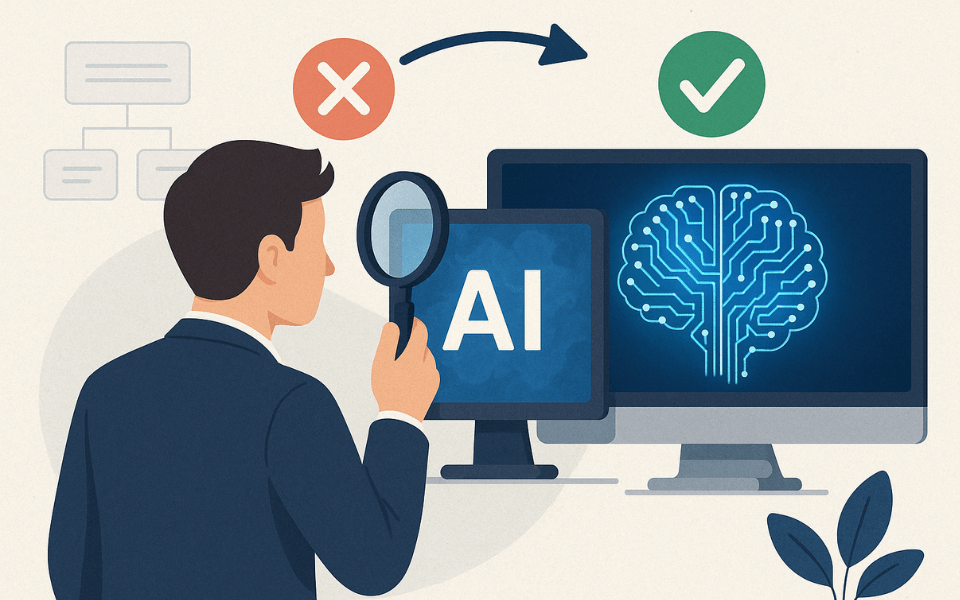
This is where AutoML is reshaping the equation. By automating key stages of the machine learning lifecycle, AutoML enables organisations to build high-performing models in a fraction of the time without compromising accuracy. When implemented correctly as part of broader AI Development initiatives, AutoML Services can dramatically accelerate innovation while maintaining enterprise-grade reliability.
What Is AutoML and Why Does It Matter for Modern AI Development
Automated Machine Learning, or AutoML, refers to a set of techniques and platforms that automate time-consuming and complex tasks in model creation. These tasks traditionally include feature engineering, algorithm selection, hyperparameter tuning, and model validation.
In conventional Machine Learning Development, data scientists may spend up to 60–70% of their time experimenting with features and tuning models rather than solving business problems. AutoML changes this dynamic by applying intelligent search strategies and optimisation algorithms that systematically explore thousands of model configurations.
For enterprises pursuing scalable AI Development, AutoML is not about replacing data scientists it is about amplifying their productivity and reducing the friction between data and deployment.
Why Traditional Model Development Slows Enterprises Down
Despite its proven value, traditional machine learning development often struggles to keep pace with business demands.
The process usually requires:
Deep expertise in statistics, algorithms, and data preprocessing
Multiple development iterations before acceptable performance is achieved
Extensive experimentation to balance bias, variance, and generalisation
Manual tuning that does not scale across multiple use cases
As organisations expand AI initiatives across departments, marketing, operations, finance, and customer experience, the demand for faster model delivery outpaces available talent. This bottleneck is one of the primary reasons enterprises turn to AutoML Services as part of their AI strategy.
How AutoML Accelerates Model Development
AutoML speeds up model development by automating the most time-intensive stages of the pipeline while applying consistent optimization logic.
Automated Feature Engineering
Feature engineering often determines model success, yet it is highly manual in traditional workflows. AutoML systems automatically generate, transform, and select features based on statistical relevance and predictive power. This significantly reduces development time while often uncovering patterns human engineers may overlook.
Algorithm Selection at Scale
Instead of relying on a limited set of algorithms, AutoML evaluates a wide range of models tree-based methods, linear models, ensemble techniques, and neural networks based on dataset characteristics. This ensures that the best-fit algorithm is chosen objectively, not based on familiarity or bias.
Hyperparameter Optimization
AutoML platforms use techniques such as Bayesian optimization and evolutionary algorithms to fine-tune hyperparameters efficiently. Studies show that automated hyperparameter tuning can achieve performance improvements of 5–20% compared to manually tuned baselines, while cutting experimentation time dramatically.
Together, these capabilities enable Machine Learning Development cycles that once took months to be completed in weeks or even days.
Maintaining Accuracy: Why Speed Does Not Mean Compromise
A common misconception is that faster model development inevitably leads to lower accuracy. In reality, AutoML often produces models that match or outperform manually developed alternatives.
AutoML systems evaluate thousands of configurations using cross-validation, ensemble learning, and rigorous statistical testing. This exhaustive search would be impractical for human teams under time constraints. Research from Google and MIT has shown that AutoML-generated models frequently achieve accuracy within 1–2% of expert-built models, and in many cases exceed them.
For enterprises focused on production-grade AI Development, AutoML ensures accuracy by standardizing evaluation metrics, reducing human error, and eliminating inconsistent experimentation practices.
The Role of AutoML in Enterprise AI Development
AutoML is most powerful when embedded into an enterprise AI ecosystem rather than treated as a standalone tool.
In large organizations, AI Development involves multiple teams, datasets, and deployment environments. AutoML Services help standardize model creation across departments, ensuring consistent quality, reproducibility, and governance.
Key enterprise benefits include:
Faster proof-of-concept to production transitions
Reduced dependency on niche ML expertise
Improved collaboration between data scientists, engineers, and business teams
Scalable experimentation across multiple use cases
This makes AutoML a foundational capability for organisations looking to operationalise machine learning at scale.
When AutoML Delivers the Highest Value
AutoML is particularly effective in scenarios where speed, repeatability, and scalability matter most.
It excels in:
Structured data problems such as forecasting, classification, and risk scoring
Rapid experimentation during early-stage product development
Organizations with limited access to senior ML talent
Enterprises deploying multiple similar models across regions or business units
In these cases, AutoML Services act as a force multiplier for Machine Learning Development, allowing teams to focus on problem framing and business impact rather than repetitive technical work.
Limitations of AutoML and the Need for Strategic Oversight
While AutoML accelerates development, it is not a silver bullet. Complex use cases involving custom architectures, deep domain knowledge, or highly unstructured data may still require manual intervention.
Additionally, enterprises must consider:
Model interpretability and regulatory compliance
Data quality and bias management
Integration with existing MLOps pipelines
Long-term maintainability and monitoring
This is why successful organizations combine AutoML with experienced AI Development teams that provide oversight, validation, and governance.
AutoML Services as a Competitive Advantage
The global AutoML market is projected to grow at a CAGR of over 40%, driven by enterprises seeking faster AI adoption without exponential cost increases. Companies that adopt AutoML early gain a structural advantage: they can test ideas faster, adapt models to new data, and respond to market shifts with agility.
When aligned with enterprise-grade AI Development strategies, AutoML Services reduce time-to-market, improve consistency, and unlock faster ROI from machine learning investments.
Conclusion: Speed and Accuracy Can Coexist
AutoML is redefining how enterprises approach Machine Learning. By automating feature engineering, algorithm selection, and optimization, it dramatically reduces development timelines while preserving and often enhancing model accuracy.
Rather than replacing human expertise, AutoML empowers teams to focus on strategy, innovation, and real-world impact. For organisations committed to scalable AI Development, AutoML Services are no longer optional they are a critical enabler of faster, smarter, and more reliable AI solutions.